Home / Base, gravel and recycled asphalt
Driveway base, gravel and recycled asphalt in Evergreen, Colorado
A driveway surface is only as good as what's under it. We build a stable, compacted base first, then choose the surface that suits your slope, your drainage and how you want the driveway to look.
What goes into a good base
The surface you see sits on a base you don't. When the base is weak, no amount of new gravel on top will hold.
Remove unstable soil
Dig out soft, organic or clay-heavy soil that won't hold its shape under traffic and water.
Replace it with stable material
Sometimes the material already on site works, if it isn't too organic or clay and will compact properly. Other times we truck in road base or structural fill.
Compact it
Compact the base by machine, using a roller attachment on the skid steer when the job calls for it, so it's firm before anything goes on top.
Finish the surface
Only then does the finished surface go down: native material, gravel or recycled asphalt.
Skipping the base is the most common reason cheap driveway jobs fail. We don't skip it.
Choosing the finished surface
Sometimes the surface is your personal choice. Sometimes it's an engineering call based on the slope and the water. We'll tell you which, and why.
Native material
If the material already on your property is suitable, it can be used for the surface. Often it isn't, and it has to be replaced.
3/4" mountain gravel
A loose gravel surface spreads water out and slows runoff, which helps with drainage. A good fit for many flatter driveways.
Recycled asphalt
Compacts into a firmer surface. On steep driveways, it gives tires better grip, so wheels don't slip and spin on the climb.
Steep or flat changes the answer
Long, flat driveways can work well with either gravel or recycled asphalt, so it often comes down to what you prefer.
Steep driveways usually do better with a compacted surface than with loose gravel, so tires keep their grip on the way up.
How drainage fits into the plan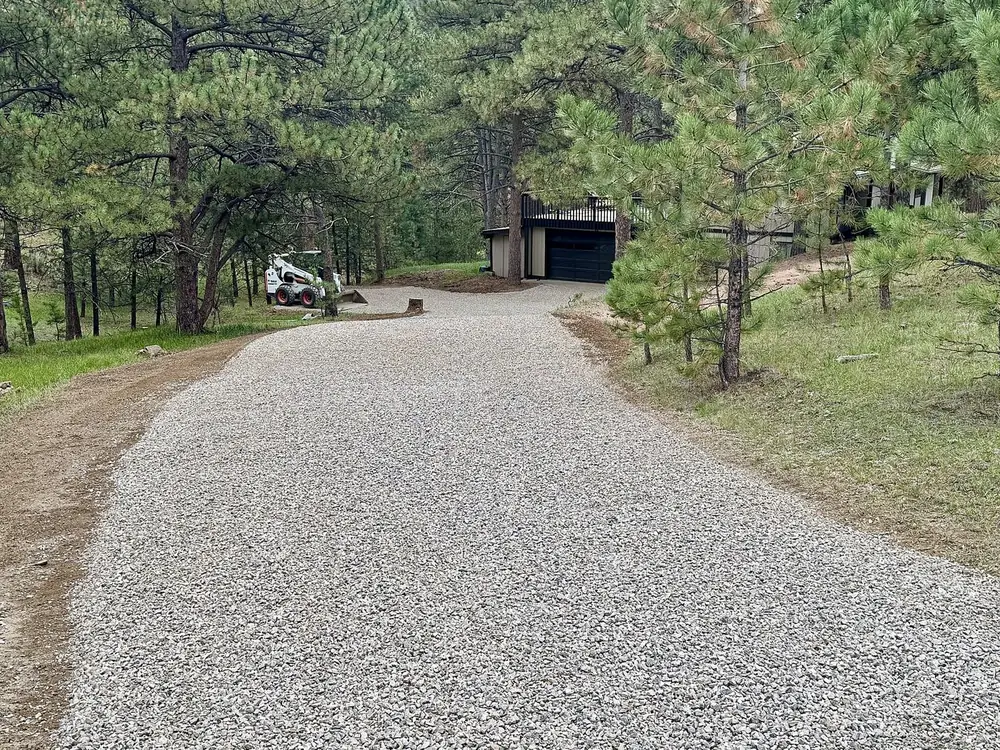
Base and surface questions
Is gravel or recycled asphalt better for a steep driveway?
Usually recycled asphalt. It compacts into a firmer surface, so tires don't slip and spin on the climb. Loose gravel can work on gentler slopes and helps slow runoff. Every driveway is different, so we look at the slope and the drainage before recommending one.
Can you use the dirt already on my property?
Sometimes. If the on-site material isn't overly organic or clay and will compact properly, we can use it. If not, we replace it with road base or structural fill.
Do you supply the road base and gravel?
Yes. We supply all the materials, so you don't need to buy or arrange anything. All you need to do is review the plan and approve the cost. We do the rest.
How much does it cost?
Every mountain driveway is different, so there is no one-size price. Our $550 minimum is for the simplest jobs: a few hours of machine work or hand work, using material already on site, with little or no new material. Most driveways fall between $2,000 and $5,000. Long driveways that need a lot of gravel or recycled asphalt, or bigger drainage work like culverts, basins and riprap, cost more, and the largest projects can reach $50,000. We focus on doing the job right, not on the cheapest version of it. Text a few photos and the rough length, and we will tell you what to expect.
Build it right from the base up
Text a few photos of your driveway and the rough length, and we will tell you what to expect.
303-276-4500